
Frostrail charcoal is a named Eden Engine fuel, but its source and burn rate are unpublished. What the demo confirms and how to stretch fuel now.
Frostrail Charcoal: Fuel for the Eden Engine
Charcoal is one of the three fuel names attached to Frostrail's locomotive, and it is the one with the least public information behind it. That makes it a magnet for guesswork — "burn wood in a kiln", "buy it from the station vendor", "it drops from Revenants" — none of which is documented.
This page separates what the developers have actually said from what players have assumed, and then covers the part you can act on today: getting the Eden Engine lit and keeping it fed in the demo.
Quick answer: Charcoal is a confirmed Eden Engine fuel in official Frostrail material, shown feeding the furnace labelled POWER and HEAT. Its source, processing recipe, burn time and efficiency are not published, and we could not confirm a charcoal item or a charcoal recipe in the October 2026 demo. In the demo, logs and branches are the fuel the game actually points you toward. Treat any "charcoal location" guide as unverified.
What charcoal does
The Eden Engine is the train's furnace, and it does two jobs at once: it produces POWER to move the locomotive and HEAT to keep the crew alive. The official furnace screenshot is labelled exactly that way, and charcoal is the fuel shown going into it.
That dual output is the reason fuel matters more here than in a normal survival game. A train that stops moving is a train that stops generating heat, and a crew that stops generating heat starts losing the run to cold rather than to enemies. Fuel is not a movement resource with a survival side effect; it is the survival resource.
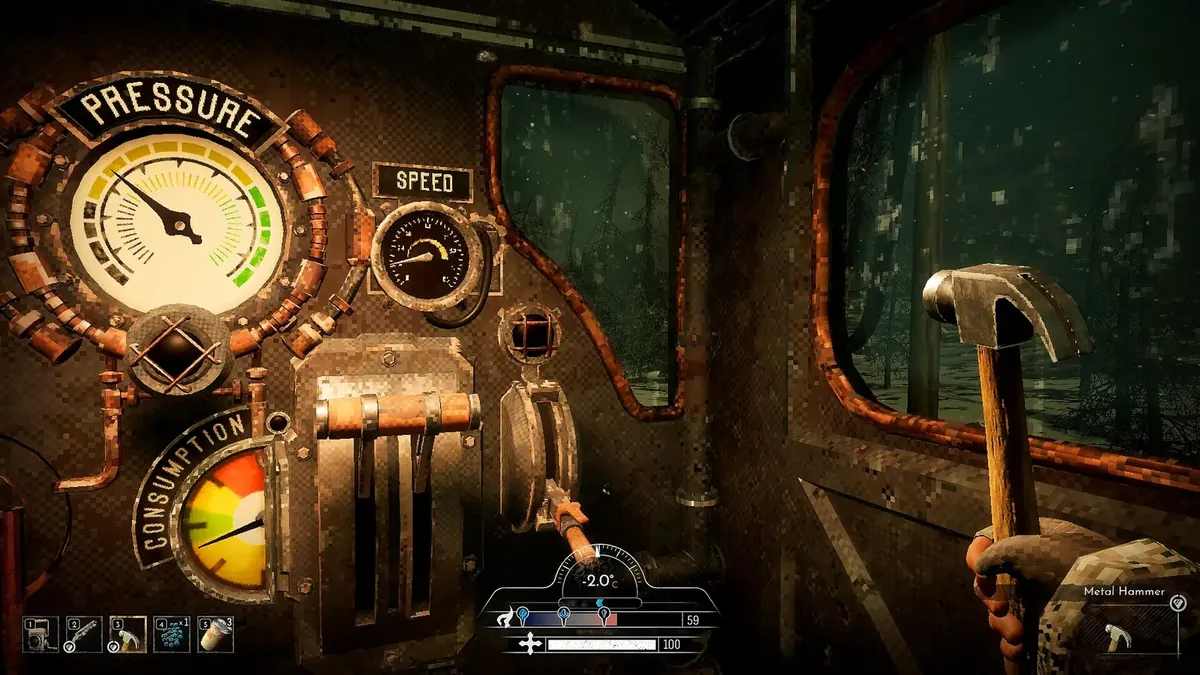
The engine has five visible systems: the fuel hatch, ignition, pressure, the heat valve and the throttle. Loading fuel without igniting it is the single most common mistake new players make, and it produces the same symptom as having no fuel at all — a flat pressure needle and an alarm in the cab.
Is charcoal in the demo?
This is where most guides start improvising, so here is the honest version.
- Confirmed: charcoal is named as an Eden Engine fuel in official material, and official screenshots show it being loaded into the POWER/HEAT furnace.
- Not confirmed: where it comes from, what it is made from, whether a vendor sells it, what it burns for, or whether it is more efficient than wood.
- Not observed: in the October 19–26 demo build, we did not find a charcoal item in loot, a charcoal recipe at the crafting bench, or a merchant selling it. The fuel tooltip in that build points at logs and branches as the plentiful, efficient option.
That does not mean charcoal is absent from the demo — a single bunker or a hidden container could hold some — but nobody has documented a reliable source, and the official fuel page lists its "produced from" field as not published.
The practical reading: charcoal is an Early Access fuel, or at least a fuel whose economy has not been shown yet. Building a demo route around it is not possible.
How fuel actually enters the engine
If you are new to the train, the sequence matters more than the fuel type.
- Open the Eden Engine hatch. It is on the engine block at the front of the locomotive, not inside the cab.
- Load the fuel. Logs and branches are the intended inputs in the demo. The hatch takes fuel directly from your hands, not from a menu.
- Ignite. Separate interaction, separate prompt. Skip it and nothing happens.
- Set the heat valve. Hold interact and drag up for more heat. High while parked, lower while driving is the habit that saves fuel.
- Release the brake, then throttle. Throttling against the brake burns fuel to produce nothing.
Once pressure is up, the train moves, the cab warms, and the gauges become the only feedback you get — the demo does not expose numeric fuel or heat values as text. You read the dials, not a number.
Charcoal vs branches vs logs
| Branches | Logs | Charcoal | |
|---|---|---|---|
| Confirmed fuel | Yes | Yes | Yes |
| Source in demo | Scavenging, common | Scavenging, less common | Not confirmed |
| Burn time | Not published | Not published | Not published |
| Efficiency | Described as plentiful | Described as efficient | Not published |
| Best use | Keeping the fire alive | Long runs | Unknown until EA |
Two things follow from that table. First, branches are the fuel you will always have and logs are the fuel you want when a route is long; the game's tooltip frames them that way. Second, charcoal's whole column is blank, which is exactly why it should not be part of your planning yet.
If you are comparing fuel against other resources, the resources guide covers what is worth carrying under the weight cap, and the train upgrades guide covers what actually changes the engine's appetite.
How to stretch fuel in the demo
Efficiency is a behaviour problem before it is a fuel problem. Five habits cover most of it:
- Do not idle at high heat. If you are out looting, the furnace is heating an empty train. Bank the heat before you leave, or accept that you are paying for warmth nobody is using.
- Lower the valve while driving. The valve is a heat setting, not an acceleration setting. Throttle moves the train; the valve keeps the cab survivable.
- Never throttle with the brake on. It looks like the train is straining; it is actually converting fuel into noise.
- Plan fuel stops with your loot runs. The demo's rail stretch is short, so almost anything burns. Early Access will not be that generous, and the habit of returning with fuel rather than leaving with it is what will carry over.
- Recycle instead of discarding. Unusable loot becomes scraps, and scraps become tools and fuel. The sorting table is the reason a bad loot run is still a useful one.
The full heat-and-food loop, including what happens when the cab temperature drops, is in the survival guide.
When charcoal is worth using
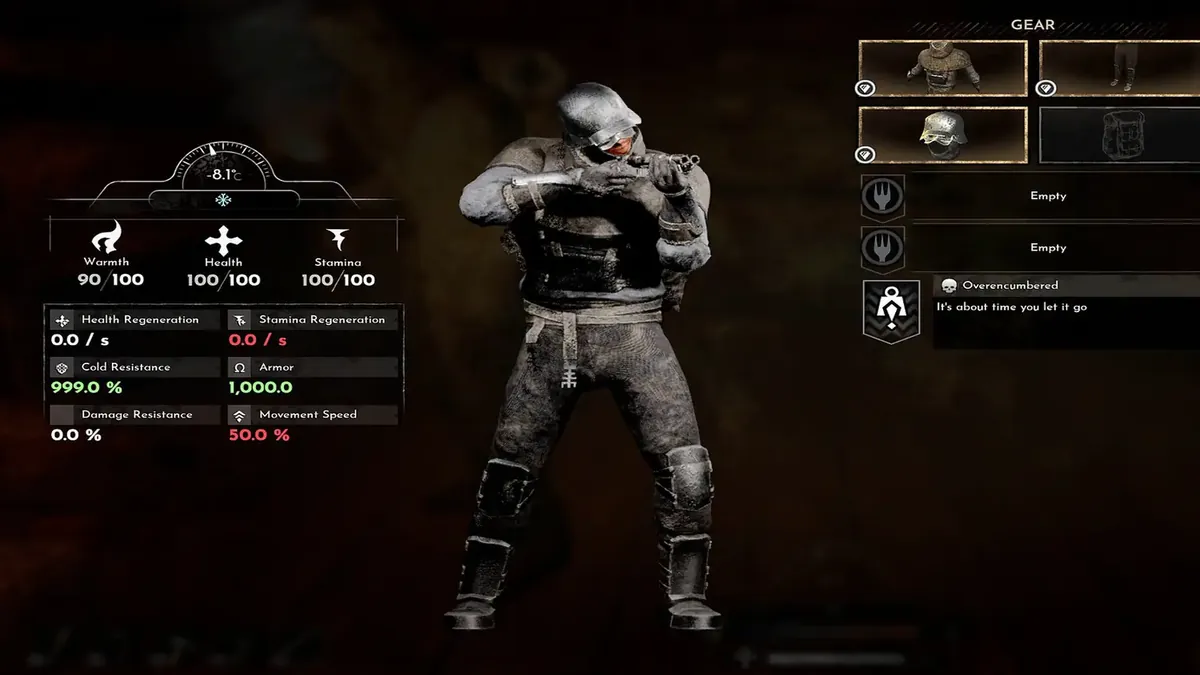
When it exists in your build, the decision is the same one you make with logs, just with less information:
- Long hauls between stops: use the densest fuel you have, because you cannot refuel mid-route.
- Blizzards and night runs: heat output matters more than range, and a fuel that burns hot is worth more than one that burns long.
- Parked at a station: do not burn premium fuel to keep an empty cab warm. Use the cheapest thing that holds temperature.
Until the recipe is published, the honest answer to "should I save charcoal?" is that you cannot save what you cannot reliably obtain. Save logs instead.
FAQ
Where do you get charcoal in Frostrail? Not confirmed. The official fuel page lists its source and processing method as unpublished, and the demo does not document a charcoal node, recipe or vendor.
Is charcoal better than logs? Unknown. Burn time, efficiency and heat output for all three fuels are unpublished. Do not assume the rarer fuel is better.
Does charcoal go in the same hatch as logs? Yes — the Eden Engine has one fuel input, and official material shows charcoal going into the same POWER/HEAT furnace.
Why do other guides list charcoal locations? Because the search demand exists and the data does not. Any specific location claim should be treated as unverified until it appears in patch notes or an official build.
More Frostrail Guides
Frostrail demo walkthrough: the full objective chain from first log to bunker shrine, what to craft at each step and when to return to the train.
Frostrail Eden Engine guide: hatch, fuel, ignition, pressure and consumption gauges, heat valve settings and how to avoid stalling the locomotive.
Frostrail enemies: Revenant aggro, the charge when shot, group sizes, melee and zip gun counters, and which enemy types are still unconfirmed.
Frostrail FAQ: release date, price, co-op player count, crossplay, platforms, demo length, saving, languages and the Barotrauma comparison.
Frostrail release date: Early Access lands in Q4 2026 with no exact day or price. Confirmed timeline, launch features and what is still unknown.
Frostrail resources: metal, wood and textile scraps, sorting table conversions, the best fuel and farming routes that respect the 40 weight cap.
Frostrail survival: warmth versus health, sealing a heated room, fuel choices, food, bandages, cold damage and the 40 weight Overcumbered cap.
Frostrail system requirements from Steam: Windows 10 64-bit, 16 GB RAM and RTX 3060 minimum, 32 GB and RTX 4060 recommended, 25 GB storage.